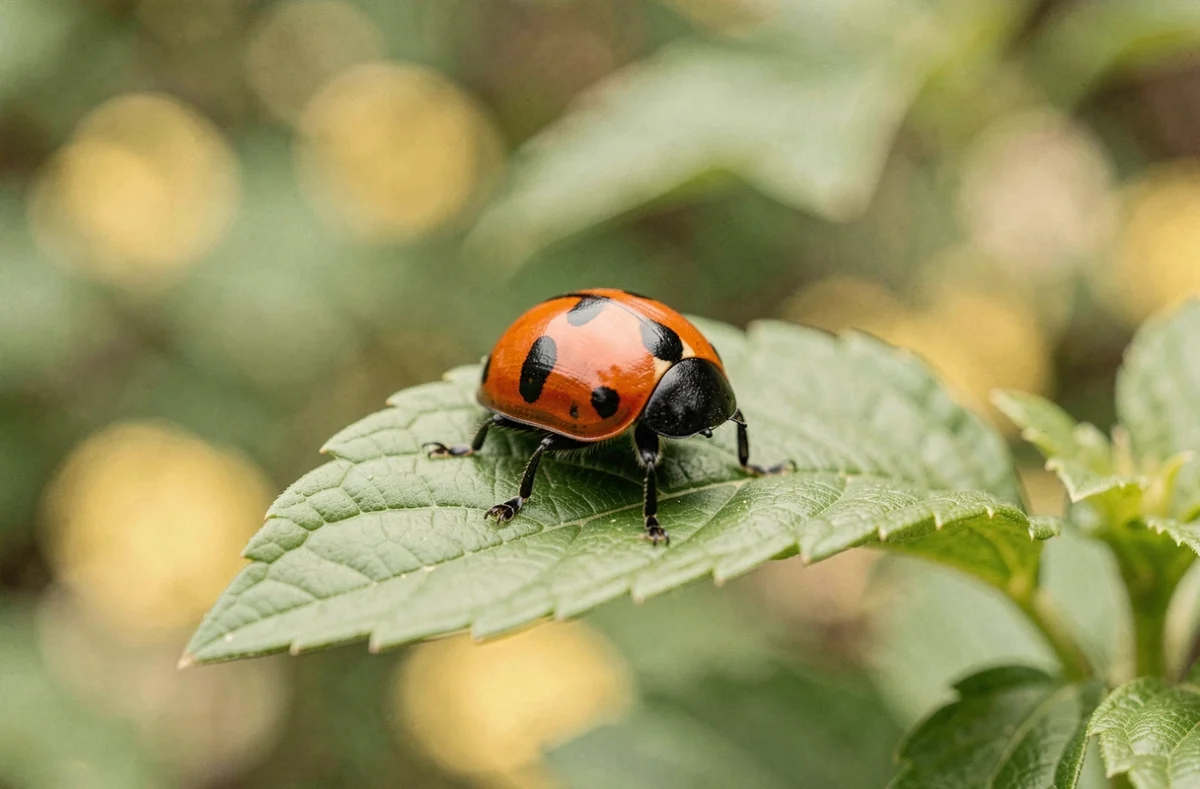
A ladybird’s black coloring with red spots does not identify a single species. This color pattern may be a melanistic form of the Asian lady beetle (Harmonia axyridis), but it can also belong to other native Coccinellidae. Drawing conclusions about a garden’s biodiversity from the arrangement of spots alone means mistaking a visual clue for an ecological diagnosis.
Pronotum patterns and reliable ladybird identification
Counting the spots on the wing cases is the most common approach—and the least reliable. In Harmonia axyridis, the number of spots ranges from none to more than twenty, depending on the form (succinea, spectabilis, conspicua). The melanistic form, black with red spots, occurs alongside orange forms with black spots within the same population.
The distinguishing feature is the pronotum pattern, the plate just behind the head. In the Asian lady beetle, it typically has a black “M” or “W” marking on a pale background. This marker remains stable regardless of the color of the wing cases. A clear, front-facing photo of the pronotum provides a more reliable identification than a top-down shot of the wings.
Combining this visual observation with the insect’s size strengthens the diagnosis. Harmonia axyridis is noticeably larger than the seven-spot ladybird (Coccinella septempunctata) in its most common form. Considering the pronotum, size, and shape of the wing cases together greatly reduces the risk of misidentification.
To learn more about the meaning of a black ladybird with red spots, you first need to know which species you’re looking at, since their ecological implications differ radically.
Asian lady beetles and native species: interspecific competition in the garden
Harmonia axyridis is an effective aphid-eating predator. Its ability to consume large numbers of aphids each day makes it a sought-after biological control agent, which led to its deliberate introduction in several regions around the world.
The downside is well documented. When aphid colonies decline, the Asian lady beetle turns to other food sources: eggs and larvae of native ladybirds, pollen, and ripe fruit. This intraguild predation directly affects populations of Coccinella septempunctata, Adalia bipunctata, and other local species.
So, seeing a high density of black ladybirds with red spots in a garden can mean two contradictory things: high aphid pressure (and therefore abundant prey), or dominance by an invasive species at the expense of local ladybird diversity. The abundance of a single predator does not prove ecological richness.
Observation protocol for assessing a garden’s true biodiversity
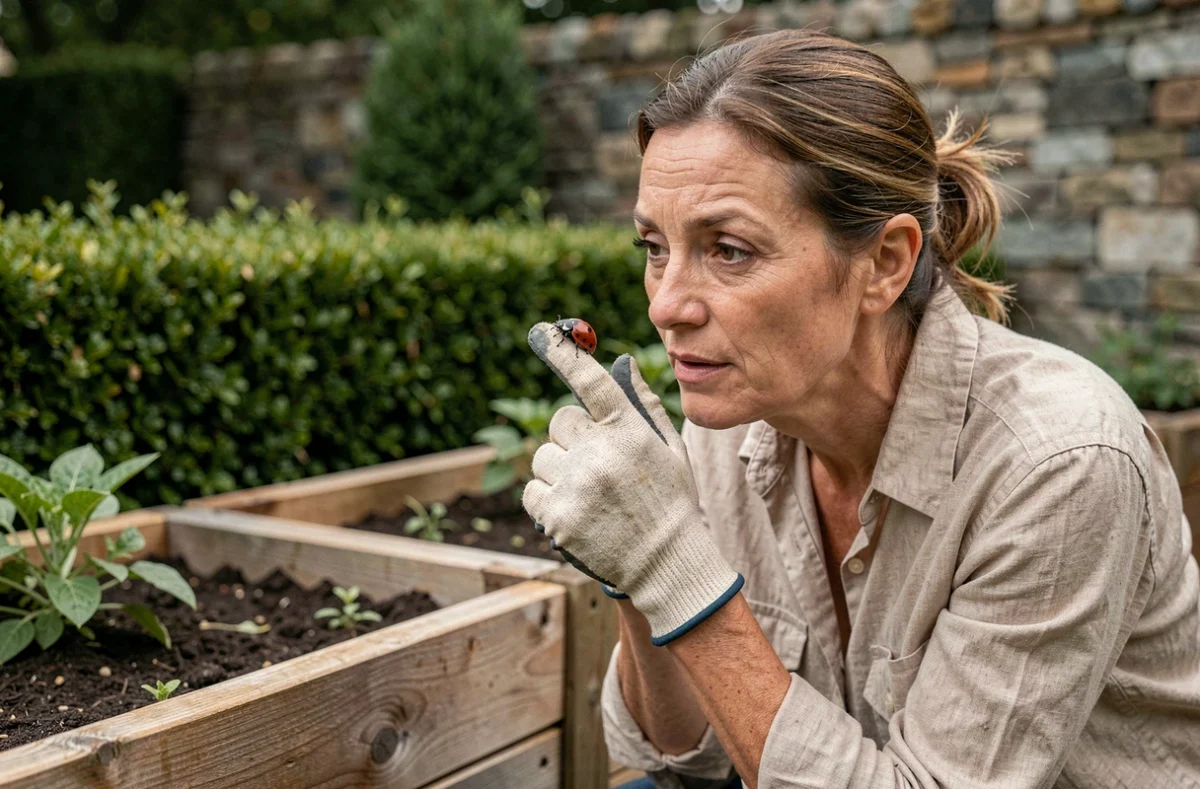
Seeing a ladybird perched on a stem does not prove that it is feeding there. Predatory activity can be confirmed by the simultaneous presence of aphids, by observing ladybird larvae (which consume more than adults), and by tracking changes in pest colonies over several days.
A one-off survey is merely anecdotal. Repeated observations at regular intervals throughout the growing season help distinguish a chance visit from a lasting presence. Record the following systematically:
- Number of ladybird species identified (not just the number of individuals), photographing the pronotum of each distinct form encountered
- Presence of larvae and pupae, which indicate active breeding at the site rather than simply adult beetles passing through
- Diversity of other beneficial insects observed (hoverflies, lacewings, ground beetles, earwigs), since an ecologically rich garden supports several predator guilds
- Condition of microhabitats: hedges, leaf litter, deadwood, and areas of spontaneous vegetation, which provide winter refuges and breeding sites
Habitat diversity versus the abundance of one species: what a ladybird can’t tell you
The most common pitfall is interpreting the mass presence of an insect as a positive sign. In community ecology, species diversity—not the dominance of a single taxon—is what indicates the health of an ecosystem.
A garden where large numbers of Asian lady beetles are the only beneficial insects observed may point to a simplified environment: a uniform lawn, no hedges, or treatments that eliminate more sensitive species while sparing the most resilient one. By contrast, a garden where a few seven-spot ladybirds coexist with hoverflies, lacewings, and spiders has a more stable food web.
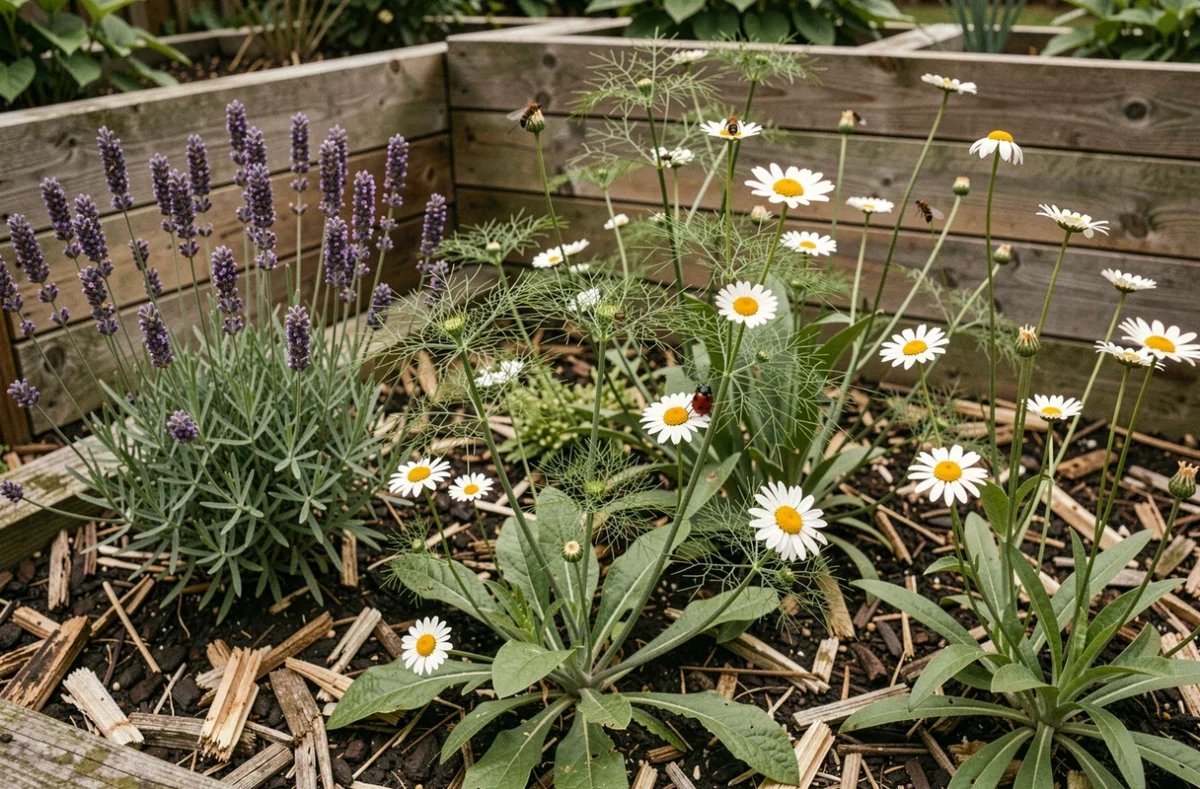
The most informative signal is habitat diversity, not the color of a single insect. Hedgerows, woodpiles, organic mulch, flower strips, and unmown areas create a mosaic of ecological niches. Each layer of vegetation attracts its own communities of arthropods.
Species to monitor alongside ladybirds
Hoverflies (Syrphidae) are reliable complementary indicators. Their larvae eat aphids, while the adults, which are pollinators, depend on a diverse supply of flowers. Seeing hoverflies in large numbers suggests both aphid pressure and an adequate supply of flowers.
Lacewings (Chrysoperla carnea and related species) frequent gardens with winter shelters. Their presence indicates a well-structured environment. Ground beetles, which prey on organisms at ground level, need leaf litter and covered areas. Their absence often points to excessive soil maintenance.
Reducing a garden’s biodiversity to a single sighting of a black ladybird with red spots is like judging the quality of a forest by counting just one tree species. The diversity of beneficial insects and the garden’s structural variety are the two most robust measures for assessing the ecological health of a cultivated space.