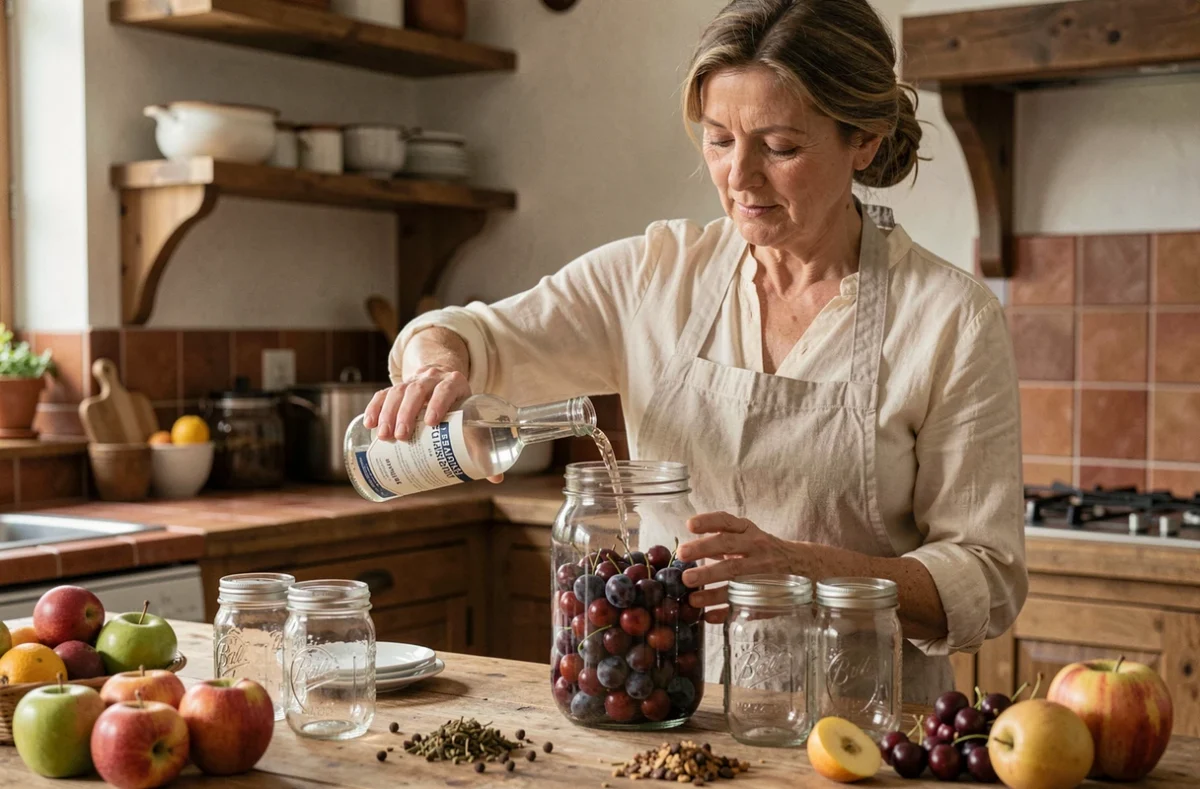
When you open a jar of cherries in alcohol prepared six months earlier and the fruit has retained its color, firmness, and a clear aroma, you know that the base used has done its job. Food-grade 90% alcohol for fruits is making a comeback in kitchens, driven by a resurgence in homemade preserves. Understanding what distinguishes this product from a simple bottle from the drugstore changes the final result in the jar.
Extraction of aromas at 90°: what really happens in the jar
A fruit immersed in high-proof alcohol does not macerate the same way as in a 40° brandy. At 90°, ethanol quickly penetrates plant cells and releases aromatic compounds, pigments, and sugars in just a few days. You obtain a concentrated, more pronounced extraction, which then serves as a base to dilute according to the desired result.
This extraction power has a downside that is often underestimated: each fruit reacts differently to 90°. Citrus peels release their essential oils very quickly, sometimes in just a few days. Red fruits (raspberries, blackberries) take several weeks to deliver their full aromatic range. Spices can turn bitter if the maceration is prolonged too long.
Working at 90° therefore requires monitoring the infusion time and tasting regularly. You don’t leave a jar in a cupboard for three months without checking, on the pretext that the high proof “does all the work.”
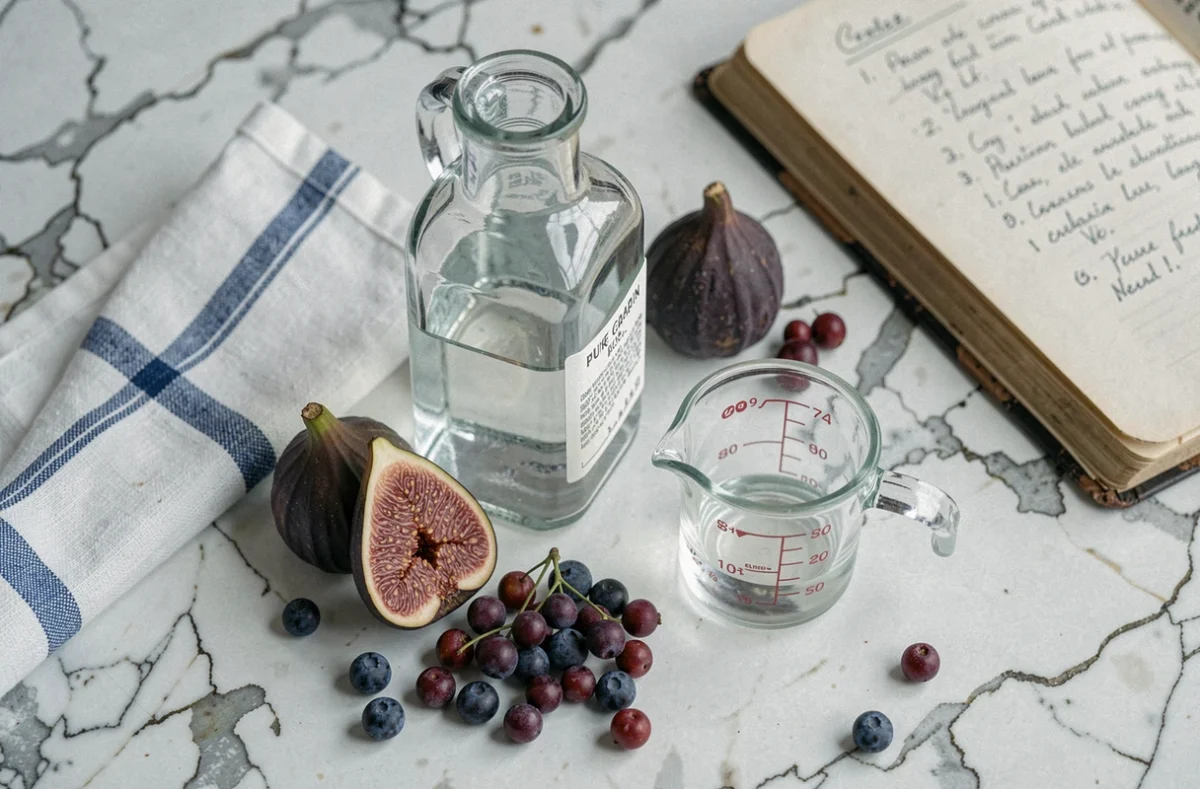
Those who wish to use food-grade 90% alcohol for fruits in supermarkets can now find bottles clearly labeled “food use,” making it easier to spot on the shelves.
Food-grade alcohol vs. denatured alcohol: the label trap
The real issue on the ground is that a bottle of 90° household alcohol closely resembles a bottle of 90° food-grade alcohol. Same degree displayed, same volume, sometimes even the same aisle in the store. The difference lies in what you cannot see: the presence of denaturants makes household alcohol toxic.
Household alcohol contains additives like bitrex or methyl ethyl ketone, intentionally added to discourage ingestion. These substances allow the manufacturer to evade excise duties on spirits, resulting in a significantly lower price. Food-grade alcohol for fruits, on the other hand, is pure undenatured ethanol, subject to heavier taxation.
In practical terms, before buying, check three elements on the label:
- The mention “agricultural origin ethyl alcohol” or “refined alcohol,” which confirms the absence of denaturants
- The indication “food use” or “for fruits,” which distinguishes the product from household alcohols sold in the same aisle
- The price, which is a reliable indicator: food-grade alcohol at 90° costs significantly more than household alcohol of the same volume, precisely because of the excise duties
Confusing the two not only spoils the preparation. Ingesting denatured alcohol poses a real health risk.
Maceration at 90° or maceration at 40°: choose according to the fruit and use
It is often said that 90° is the absolute reference for fruits in alcohol. In practice, it is not so clear-cut. The two approaches produce different results, suited to distinct uses.
The 90° excels when preparing a concentrated base intended to be diluted later with a sugar syrup or water. This is the classic method for limoncello, blackcurrant liqueur, or cherries in brandy. The high proof acts as a natural preservative by inhibiting bacterial growth and stabilizing the fruit’s pigments.
A fruit brandy at 40-45°, on the other hand, produces a gentler maceration, where the alcohol blends more with the fruit juice. It is used more for ready-to-drink preparations without dilution, such as spiced rum or walnut wine. The result is less powerful in extraction but rounder on the palate straight from the jar.
The choice also depends on the quality of the fruits. Very ripe but intact fruits handle 90° well because their natural sugars balance the alcohol’s strength. Slightly damaged or crushed fruits risk releasing too much pulp and creating a cloudy deposit, regardless of the degree used.
Filtration and storage of the finished product
Once the maceration is complete, carefully filtering changes the product’s longevity. Avoid pressing the berries hard after maceration: this pressure releases pulp and particles that accelerate oxidation and cloud the liqueur. A pass through a coffee filter or cheesecloth is sufficient to obtain a clear liquid.
Storage then depends on the final degree after dilution. A liqueur maintained above 25° alcohol can be kept for several months at room temperature without notable alteration. Below that, it is better to store in the refrigerator and consume within the following weeks, especially if the preparation contains fresh fruit juice.
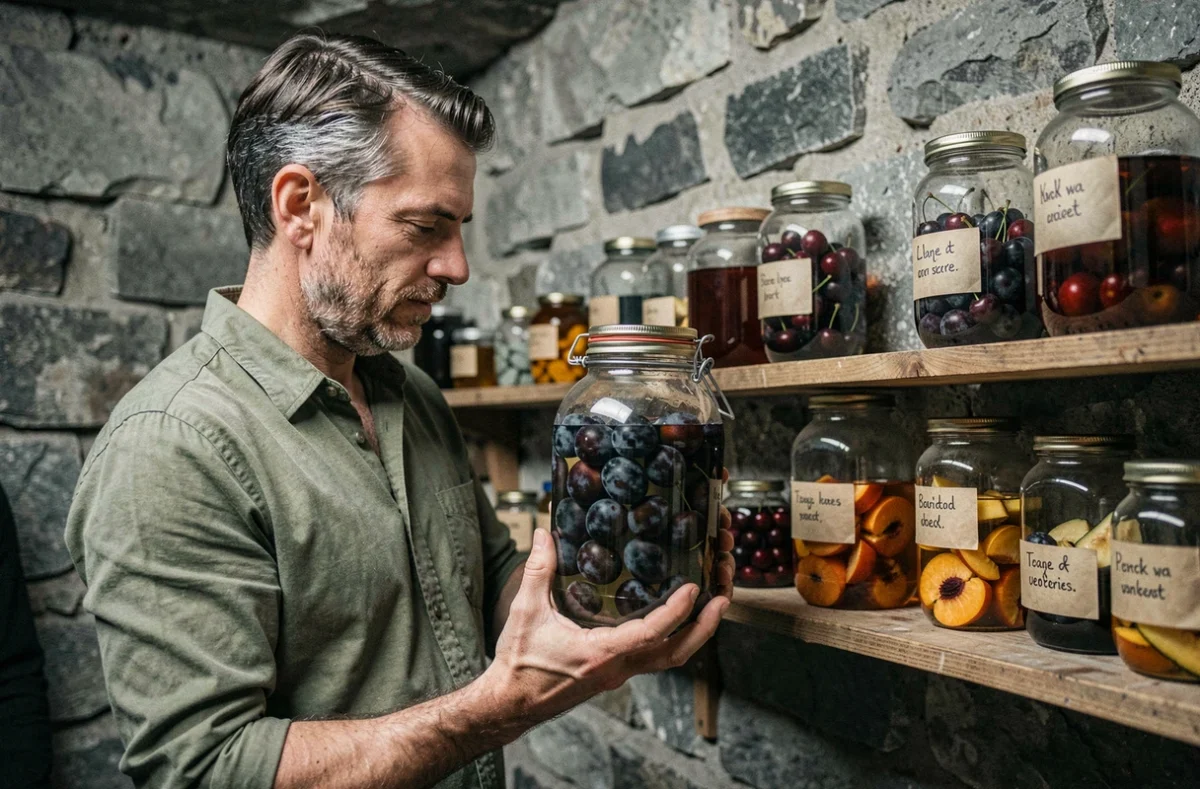
Regulations and access in France: where to find food-grade 90% alcohol
Undenatured high-proof ethyl alcohol is not freely sold in all outlets. In France, supermarkets offer bottles specifically labeled for fruit maceration, usually in the cooking alcohol aisle or seasonal products at the end of summer.
Pharmacies historically sold 90° alcohol, but the supply has diminished: most now only offer modified 70° alcohol intended for disinfection, which has nothing to do with a food product. Some gourmet shops and online stores specializing in artisanal distillation also sell food-grade ethanol, sometimes in larger packaging.
Key points to remember:
- Always check for the mention “undenatured” or “food use” on the packaging
- Store the bottle away from light and heat, tightly closed, away from any flame source (90° ethanol is highly flammable)
- Never transfer to a non-labeled food container to avoid any domestic confusion
The return of homemade preserves and artisanal liqueurs has made food-grade 90% alcohol more visible on the shelves. Seasonal demand peaks between July and October, when stone fruits and berries reach maturity. Anticipating purchases before this window avoids frequent stockouts in supermarkets.