
French labor law does not contain any list of professions formally prohibited to tattooed individuals. Article L1132-1 of the Labor Code protects candidates against any discrimination based on physical appearance, including tattoos. However, certain sectors impose strict restrictions, not out of aesthetic rejection, but in the name of neutrality, safety, or commercial image.
Understanding where these limits lie requires distinguishing what the law states, what internal regulations provide, and what recruiters tolerate on a daily basis.
Internal regulations and tattoos: the legal mechanism that frames restrictions

No legislative text mentions the word “tattoo.” The existing restrictions come through another channel: the internal regulations of the company or institution. This document can impose dress and appearance constraints, provided they are justified by the nature of the task and proportionate to the intended purpose.
Air France, for example, specifies in its uniform rules manual that visible tattoos or piercings are not allowed for flight personnel. This restriction is based on brand image and direct contact with customers. It has been deemed compliant with the law because it targets a specific function, not the entire staff.
A broader overview of professions where tattoos are prohibited shows that the boundary shifts depending on the position held, the visibility of the tattoo, and the sector of activity. A tattoo on the forearm does not pose the same problem as a design on the neck or hands.
Army, police, gendarmerie: uniformed bodies facing visible tattoos
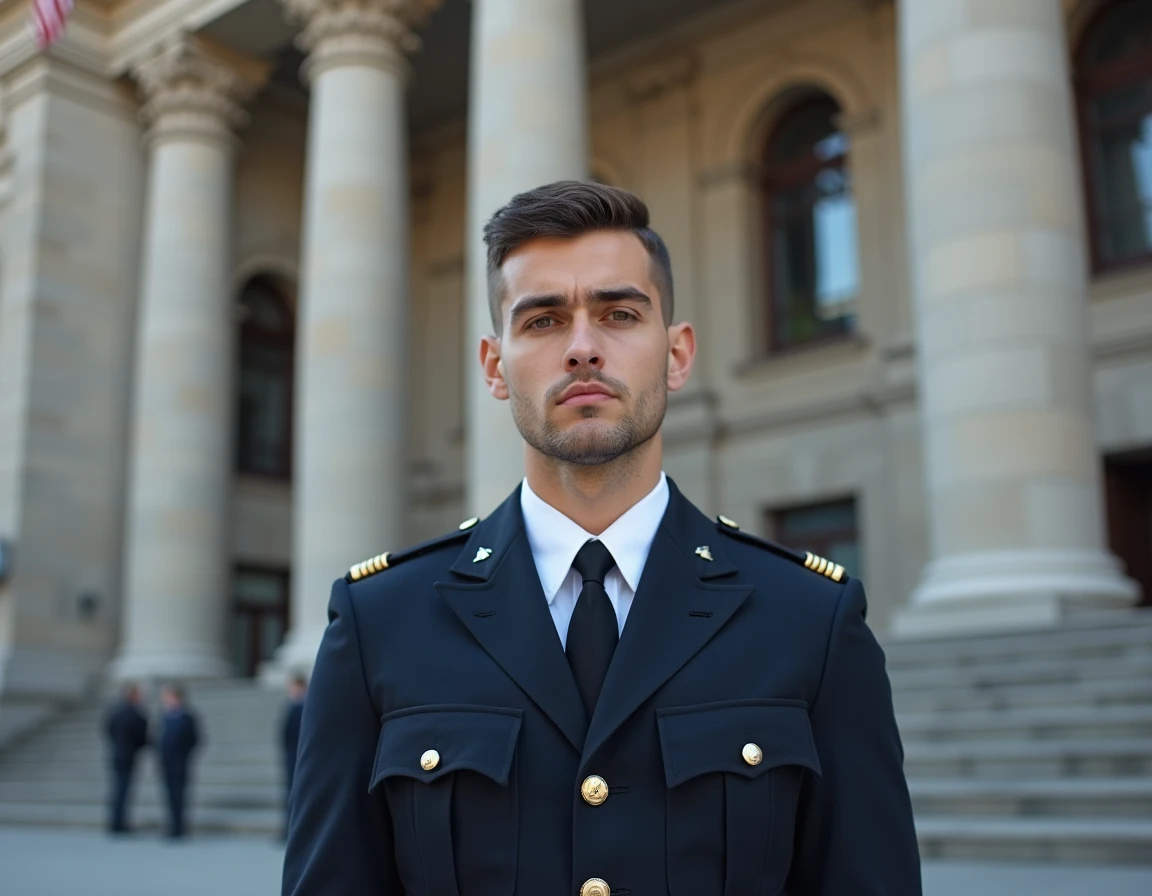
The armed forces and law enforcement represent the area where the rules are most explicit. The French army prohibits visible tattoos while in service uniform, which effectively excludes the face, neck, hands, and any area not covered by the official uniform. Designs of a violent, political, religious nature, or contrary to the values of the Republic result in a rejection of the application, regardless of their location.
The gendarmerie and national police apply similar criteria. Candidates undergo a medical fitness examination during which tattoos are examined. The doctor assesses their compatibility with the performance of duties, taking into account their location and nature.
What “incompatible” actually means
A discreet tattoo on the shoulder will not block an application to the police. However, a design covering the entire visible arm in a short-sleeved shirt poses a problem of apparent neutrality. Field feedback varies on this point: some candidates report rejections for moderately visible tattoos, while others indicate they were accepted with similar pieces.
- Face, neck, hands: areas almost systematically rejected in uniformed bodies
- Forearms and calves: evaluated on a case-by-case basis depending on size and design
- Tattoos with political, religious, or violent connotations: rejection regardless of location
- Areas permanently covered by the uniform: generally tolerated
Flight personnel and luxury hospitality: commercial image as a criterion
The airline sector and high-end hospitality share a common logic: the employee physically embodies the brand in front of the customer. Airlines often impose detailed appearance charters. The case of Air France, already mentioned, is not isolated. Most traditional airlines apply similar restrictions for cabin crew.
In luxury hospitality, palaces and starred establishments frequently include appearance clauses in their contracts. A receptionist or concierge with a visible tattoo on their hands or neck may be asked to cover it. The boundary between legitimate requirement and discrimination remains blurred, and the number of refusals actually related to tattoos in this sector is not recorded.
Public service and education: the question of neutrality
Contrary to a common belief, a tattooed teacher cannot be dismissed from their position on this sole criterion. Recent decisions from labor courts confirm this position. The principle of neutrality in public service concerns the absence of ostensible religious, political, or philosophical signs, not body ornamentation as such.
A tattoo representing a religious symbol or a visible political slogan could, however, pose a problem regarding the obligation of neutrality. The distinction concerns the content of the tattoo, not its existence. A teacher with a floral design on their wrist is not in the same situation as a reception agent displaying a militant message on their forearm.
Agents in contact with the public
Counter agents, local government officials in town halls, or hospital staff face variable expectations depending on the communities and establishments. No national circular imposes a uniform restriction. Practices vary significantly from one administration to another, creating a gray area for candidates.
Tattoo and recruitment: what really happens in interviews
Beyond written regulations, tattoos remain an informal assessment factor during job interviews. Several surveys conducted in the English-speaking world show that the perception of tattoos is evolving rapidly, but the banking, insurance, and strategic consulting sectors maintain rigid dress codes.
- Positions in direct contact with premium clientele remain the most sensitive to the visibility of tattoos
- Technical, IT, or creative roles exhibit significantly higher tolerance
- The size, location, and content of the tattoo weigh more than its mere presence
The tattoo market itself is undergoing a period of transformation. The notable increase in tattoo removal procedures in the United States suggests that professional constraints directly influence the bodily choices of some employees.
The gap between the protective legal framework and actual recruitment practices remains the most challenging aspect to document. A candidacy refusal unofficially motivated by a tattoo leaves no written trace, making discrimination nearly impossible to prove before labor tribunals. The law theoretically protects, but the burden of proof rests entirely on the candidate.