
The line comes out three centimeters, we tap the head on the ground, nothing happens. We unplug, we disassemble, we waste ten minutes in the middle of a half-finished edge. This scenario has been experienced by every string trimmer user at least once. The problem rarely comes from the machine: it’s the reloading method or the type of head that gets stuck. Knowing how to properly extend the line of a string trimmer radically changes the flow of a mowing session.
Reloading without disassembly: the method that most manuals ignore
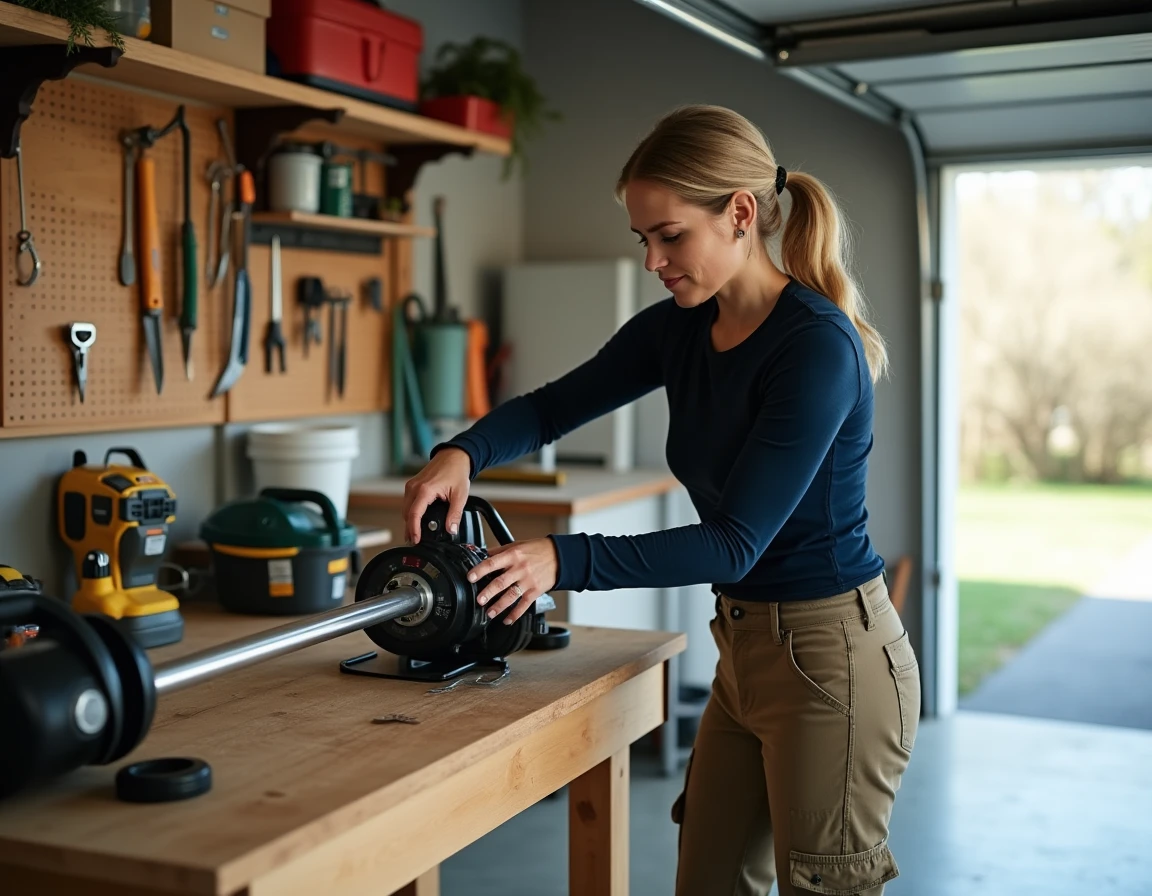
On recent “bump feed” heads from brands like Ryobi, Husqvarna, or Stihl, a grommet reloading system allows you to reload the line without opening the head. You cut a length of line, insert it into the two side grommets of the head, then turn the central knob to wind it up. No need to remove the spool or unscrew the lower cover.
This method saves considerable time in the field, especially when moving between multiple areas. Most classic tutorials focus almost exclusively on completely disassembling the head, while this manipulation is sufficient in the majority of cases for recent models.
For those who want to delve deeper into how to extend the line of a string trimmer according to each type of head, the approach varies significantly from one mechanism to another.
Bump feed, tap and go, or manual head: adapting the action to the mechanism
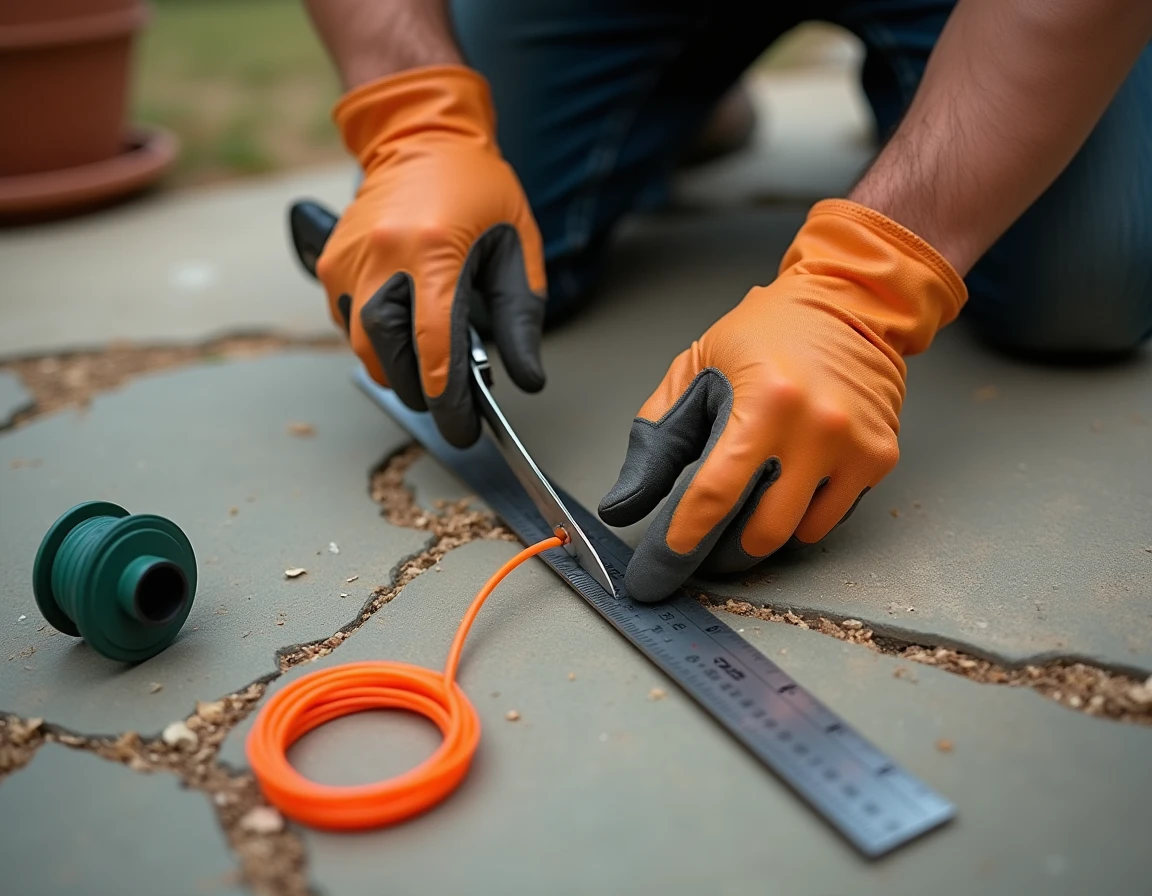
Not all string trimmer heads extend the line in the same way. Confusing the systems guarantees a jam or a line that snaps at the first contact with a wall.
Bump feed head (semi-automatic)
You strike the base of the head against the ground while the motor is running. An internal spring releases a few centimeters of line. The action should be firm but brief. Too strong a contact unwinds too much line at once, causing a tangle in the spool.
If nothing comes out despite the strikes, the line is probably stuck inside. In this case, stop the motor and check that the line hasn’t melted onto itself in the spool (a common problem in hot weather or after prolonged use).
Tap and go head (automatic)
Recent cordless trimmers from Bosch, Stihl, or Black+Decker increasingly incorporate this system. A simple contact with the ground is enough, without pressing hard. The line advances through an internal ratchet mechanism that automatically measures the length.
This system significantly reduces interruptions during work. Feedback varies on this point, but most users find that it’s still necessary to regularly check that the line hasn’t become jammed in one of the grommets.
Manual head (entry-level)
On the simplest models, you need to disassemble the head to access the spool. You remove the cover, take out the spool, wind the new line in the direction indicated by the arrow engraved on the spool, then pull out the two strands through the grommets before reassembling everything.
- Always wind the line in the direction of the arrow molded on the spool; otherwise, the exit mechanism won’t work
- Leave a length of line sticking out about a finger’s width on each side before closing the cover
- Do not cross the strands inside the spool: this is the primary cause of blockage when extending the line
Bulk line or pre-loaded cartridges: the choice that affects cost and speed

Several manufacturers now offer pre-wound line cartridges that snap directly into the head without any manipulation. You remove the old cartridge, snap in the new one, and you’re done. For a beginner or someone who hates DIY, this is the quickest solution.
The downside: the cost of use increases significantly compared to bulk line. A roll of line purchased by the meter is much cheaper over an entire season. The difference is especially noticeable when maintaining a large area where the line wears out quickly.
For those using bulk line, pre-cut lengths before the session avoid handling in the field. Some users create or 3D print small dispensers dedicated to trimmer line to measure and store these lengths without tangling.
Line that breaks or won’t come out: quick diagnosis of common failures
When the line consistently breaks a few centimeters from the end, the quality of the line is often blamed. This is sometimes the case, but the problem more often comes from the cutting blade integrated into the housing. This small blade calibrates the maximum length of the line. If it is chipped or bent, it cuts the line too short or unevenly.
A line that refuses to come out despite a functional bump feed mechanism generally indicates one of these problems:
- The line has melted and fused to itself in the spool, often after intensive use without breaks
- The diameter of the installed line does not match what the manufacturer specifies for this head (a line that is too thick gets stuck in the grommets)
- The strands have crossed inside the spool during the last reloading, creating an invisible knot
- The spring of the bump feed head is worn out and no longer pushes the line with enough force
In the first three cases, simply disassembling the head, cleaning the spool, and rewinding neatly is sufficient. For a worn spring, replacing the entire head remains the most reliable solution.
Diameter and profile of string trimmer line: do not neglect compatibility
There is a lot of talk about the reloading method, but less about the line itself. Using an inappropriate diameter is, however, the silent cause of most blockages. Each cutting head is designed for a specific diameter, indicated on the housing or in the manual.
A line that is too thin cuts poorly and wears out quickly. A line that is too thick forces in the grommets and prevents the advance mechanism from functioning. Respecting the diameter recommended by the manufacturer resolves the majority of line exit problems.
The profile of the line (round, square, star-shaped) also plays a role. A star-shaped profile cuts thick grasses more effectively but wears out more quickly on concrete edges. For mixed use on lawns and edges, round line remains the most versatile and least prone to premature breakage.
Extending the line of a string trimmer is not complicated once you have identified its type of head and chosen a compatible line. The real time savings happen before the session: preparing your lengths, checking the condition of the cutting blade in the housing, and ensuring that the spool is neatly wound. The rest follows naturally.