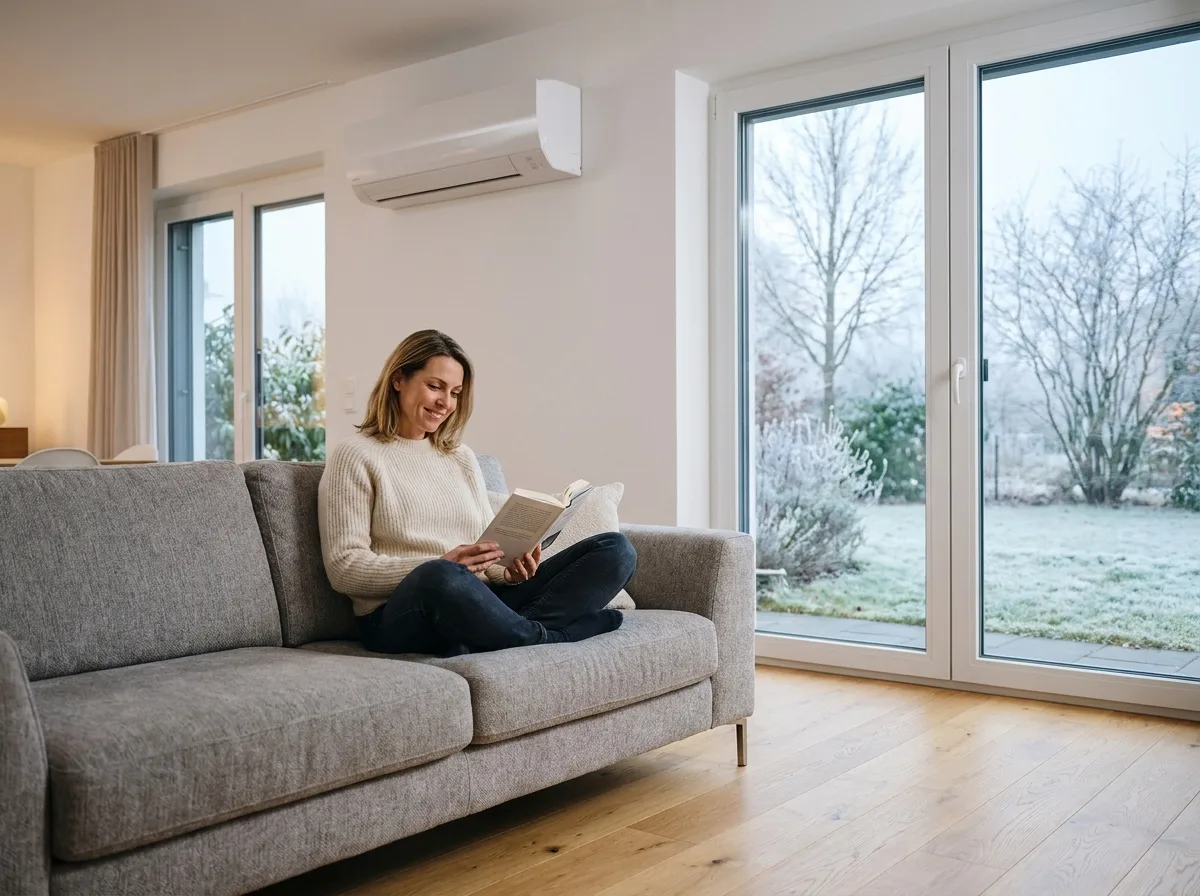
Heat pump or wood stove: the choice between these two heating systems is based on measurable data, not on aesthetic preferences. Installation cost, annual consumption, performance in extreme cold, and energy autonomy create very different profiles depending on the type of housing and climate zone.
Comparative table of heat pumps and wood stoves: key data
Before analyzing each aspect, a synthetic overview allows for situating the orders of magnitude. The ranges below reflect the discrepancies observed between entry-level and high-performance models.
| Criterion | Heat pump (air-water) | Wood stove (logs or pellets) |
|---|---|---|
| Installation investment included | Higher (outdoor unit + hydraulic connection) | Lower (flue and accessories included) |
| Thermal coverage | Central heating, all rooms | Supplementary heating or main living area |
| Dependence on the electrical grid | Total | None (logs) or very low (pellets) |
| Performance in extreme cold | COP decreases below -7 °C | Stable regardless of outside temperature |
| Annual maintenance | Mandatory refrigeration technician check | Chimney sweeping + cleaning |
| Eligibility for MaPrimeRénov’ | Yes | Yes |
This table reveals a point often underestimated: the heat pump and the stove do not serve the same function in a house. The heat pump replaces a boiler, while the stove complements an existing system or heats a targeted area. Comparing them directly without specifying this difference in scope skews any budgetary analysis.
Both systems are eligible for an energy renovation aid that significantly reduces the remaining costs, but the amounts vary depending on the type of equipment and household income.
COP and efficiency: what really measures the performance of a heating system
The COP (coefficient of performance) of a heat pump indicates how many kilowatt-hours of heat are delivered for each kilowatt-hour of electricity consumed. A COP of 3 means three times more heat produced than electrical energy consumed. This ratio makes the heat pump the most efficient system in temperate conditions.
The problem arises when outside temperatures drop. The COP drops significantly below -7 °C, forcing the auxiliary electric resistance to take over. The bill then rises to the level of a conventional electric heating system, precisely during the coldest weeks of winter.
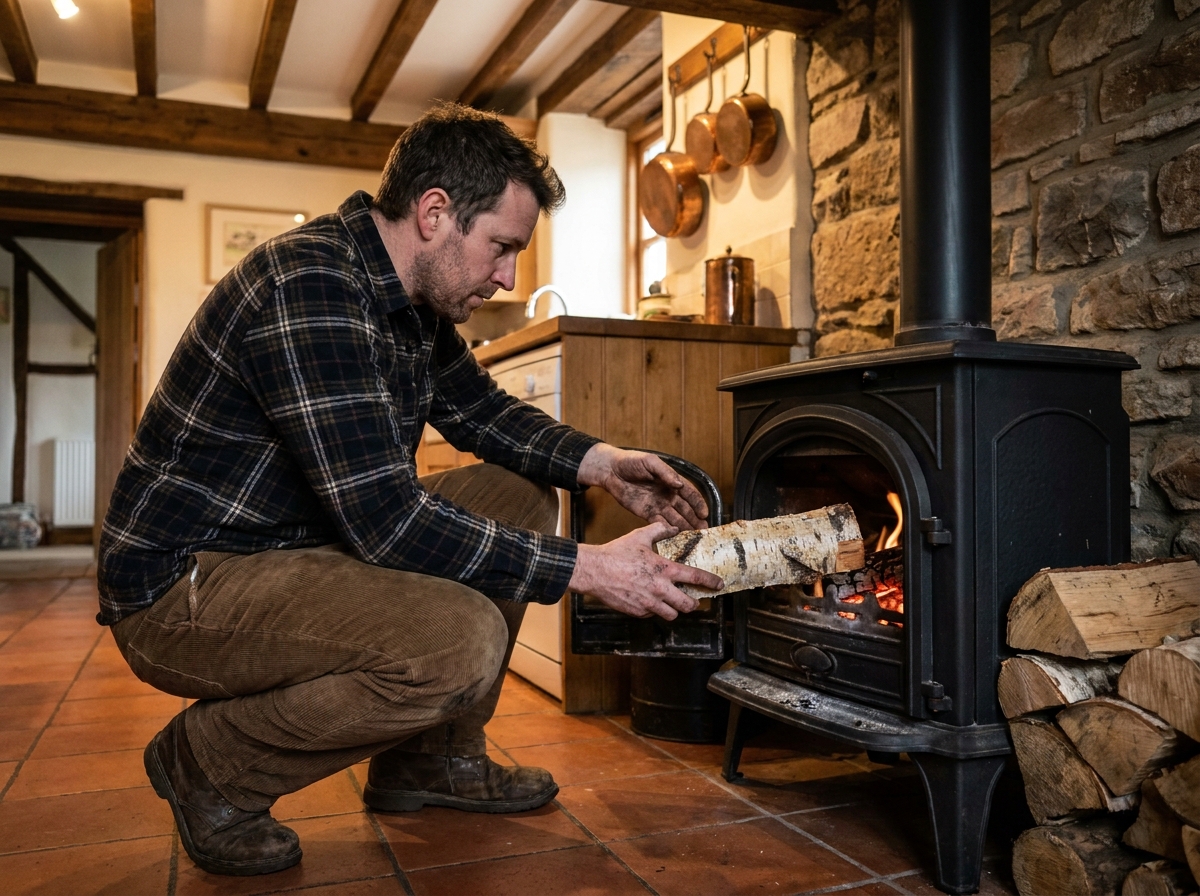
A wood or pellet stove operates differently: it burns a fuel and delivers heat through radiation and convection. Its efficiency, expressed as a percentage, measures the portion of the wood energy that is effectively converted into useful heat. Models labeled Flamme Verte achieve high efficiencies, well above traditional open fireplaces.
The performance of the stove remains constant regardless of the weather. Whether it is 5 °C or -15 °C outside, the efficiency does not change. This is a decisive advantage in regions with harsh winters, where the heat pump alone shows its limitations.
Wood heating market in 2025: logs declining, pellets rising
Classic comparisons treat the wood stove as a homogeneous category. Market figures tell a different story. Sales of log appliances fell from 330,400 units in 2023 to 164,990 in 2025, a drop of half in two years.
In contrast, pellet appliances are progressing significantly: +24% in sales in 2025 compared to 2024, with a 35% increase specifically for pellet stoves. The overall market for wood heating appliances remains below its historical peak, but the shift from logs to pellets is massive.
This trend can be explained by several concrete factors:
- The pellet offers automated feeding and programmable temperature regulation, bringing it closer to the comfort of a heat pump without relying on the electrical grid
- The price of a kilowatt-hour in pellets remains competitive compared to electricity, especially during winter peak pricing
- Local regulations are gradually restricting the use of open fireplaces and old log appliances in certain urban areas, pushing for renewal towards high-performance models
Comparing a heat pump to an old log stove no longer makes much sense. The real thermal competitor to the heat pump today is the latest generation pellet stove.
Electrical autonomy and peak days: an undervalued criterion
A heat pump does not operate without electricity. This obvious fact takes on particular significance during power outages or on the most expensive tariff days (EDF Tempo red days, for example). The wood stove is the only domestic heating system that is completely autonomous from the grid.
Power outages related to winter consumption peaks or climatic events are not anecdotal. During these episodes, a household equipped only with a heat pump finds itself without heating. A log stove, on the other hand, continues to operate normally.
For pellet stoves, electrical dependence exists but remains marginal: the fan and auger consume little, and a backup inverter is sufficient to maintain operation for several hours. It is a compromise between the automated comfort of pellets and the total autonomy of logs.
Hybrid strategy of heat pump and stove: when to combine both systems
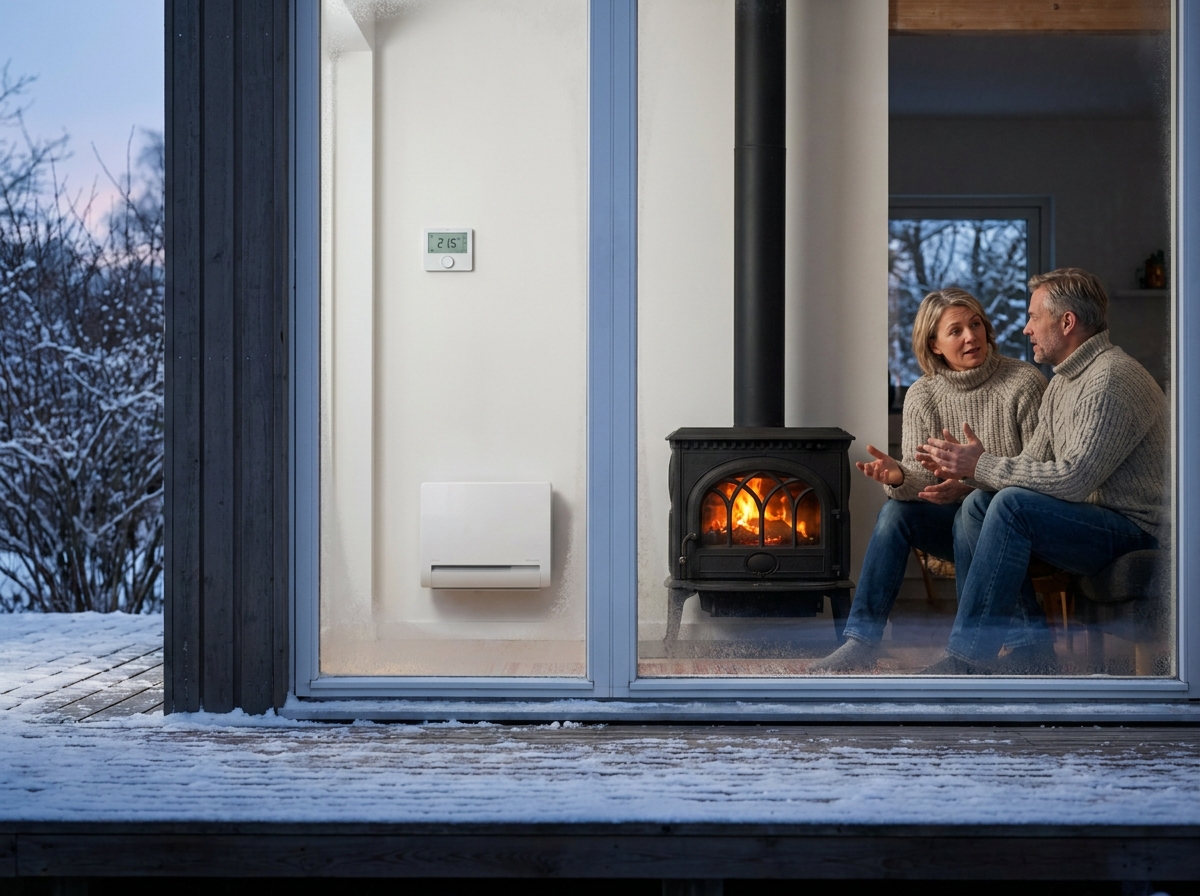
Rather than choosing between a heat pump and a stove, more and more households are installing both. The logic is simple: the heat pump provides central heating with suitable efficiency during temperate periods, while the stove takes over or complements during cold peaks.
This hybrid configuration presents measurable advantages:
- The heat pump runs less often in winter, reducing compressor wear and extending its lifespan
- The stove covers thermal needs when the COP of the heat pump collapses, avoiding reliance on the auxiliary electric resistance
- In case of a breakdown or power outage, the stove ensures minimal heating in the living area
- The combination of both systems increases eligibility for energy renovation aids, with each device qualifying for its own program
The duo of heat pump and pellet stove covers the weaknesses of each system taken in isolation. The heat pump lacks autonomy and loses efficiency in extreme cold. The stove does not heat the entire house. Together, they cover the entire thermal spectrum of a winter, including the harshest weeks.
The sizing of the stove in a hybrid configuration differs from a standalone installation. The required power is lower since the stove is not meant to heat the entire home. A model suited to the size of the main living area is sufficient, which keeps the purchase and installation budget in check.