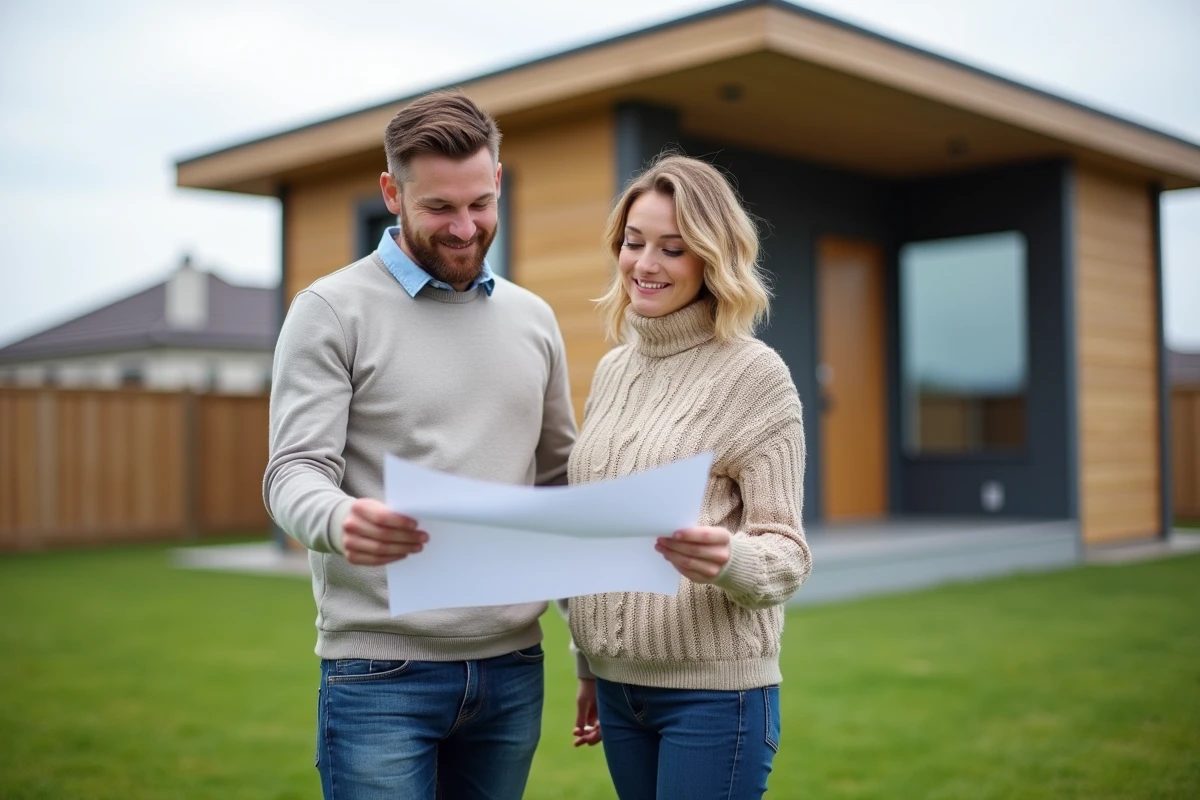
5,000 euros difference on the same project, for two prefabricated houses with twin-like appearances. This is not an anomaly; it’s the rule. In France, the prefabricated house market cultivates a diversity of offers, but also a variety of traps. Here, each formula, whether turnkey or partial kit, hides its requirements, deadlines, and unforeseen events. Some manufacturers impose stricter thermal standards than regulations. Others open the door to self-builders, but under tight conditions. The world of modular homes does not tolerate any amateurism: between commercial promises and technical constraints, the path to delivery is far from a well-marked stroll.
The construction schedule, on the other hand, cannot be confined to a universal range. Extensive customization, materials traveling hundreds of kilometers, a few local craftsmen who are slow to coordinate… and the deadline stretches. On the financial side, beware of “all-inclusive” prices: connections and property taxes lurk in fine print, rarely included in the displayed rate. As for delivery guarantees, they fluctuate based on the builder’s solidity, experience, and ability to absorb unforeseen events. A well-structured project therefore requires clarity, vigilance, and anticipation at every stage.
Prefabricated Houses: Understanding the Different Types, Advantages, and Limitations
Choosing a prefabricated house opens up a world of possibilities. Several families share the market, each with its promises and constraints. Wooden prefabricated houses are appealing due to their quick assembly, thermal insulation performance, and lightness. In contrast, concrete or steel models emphasize robustness and durability. The range of materials and techniques offers rare adaptability: environment, level of finish, aesthetic expectations, it all comes into play. Enthusiasts of kit homes invest personally: some assemble their own wood frame, while others prefer to entrust the site to the manufacturer, hand in hand.
The quality of manufacturing allows for no compromise. Neither on compliance with standards nor on the expected lifespan. A standard house construction attracts with a controlled cost, but each customized option adds to the bill. The average price of a prefabricated house depends on the area, the configuration of the spaces, single-story or multi-story, modularity, and the level of equipment chosen. While traditional construction retains loyal followers, the modularity of prefabricated houses responds to land pressure and evolving lifestyles.
To compare the options on the market in detail, explore manufacturing standards, or target a solution suited to your land, the resources of maisonseurofrance.fr prove invaluable. The modularity of wood frame houses, the diversity of kit homes: all assets for building a habitat that meets your ambitions while controlling environmental impact. The offer ranges from compact models to family villas, with increased attention to ecological footprint and the enhancement of existing buildings.
What Criteria to Prioritize When Choosing the Right Model for Your Real Estate Project?
When choosing your prefabricated house, every parameter counts. The material first: a wood frame ticks the ecological box and guarantees effective thermal insulation, while hybrid solutions offer increased resistance. The quality of manufacturing must take precedence, as it influences both durability and comfort of living. As for the options, high-efficiency windows, innovative heating systems, they deserve to be scrutinized line by line.
The configuration of the house should be considered based on actual needs: how many rooms, what area, single-story or multi-story, every detail shapes future use and property value. Betting on spaces that can evolve to follow your life transitions often proves worthwhile. The house construction project also fits into the immediate environment: orientation, exposure, nature of the land, nothing should be left to chance.
Here are three essential points of vigilance to refine your selection:
- Check compliance with French standards, both in terms of thermal performance and safety.
- Request total transparency on insulation performance and the origin of materials.
- Assess the modularity of the model, to anticipate future extensions or transformations.
To hit the mark, explore the possibilities offered by wood frame houses or kit home construction that adapt to the variety of French contexts. Success lies in finding coherence between land constraints, your architectural desires, and the chosen model’s ability to meet reality over time.
Budget, Key Steps, and Practical Tips for Successfully Building a Kit Home
No project without a solid budget. The kit home price is appealing for its clarity: expect to pay between 900 and 1,500 euros per square meter, depending on the range, chosen options, and the characteristics of the land. But it doesn’t stop at the kit home: add the costs of site preparation, connections, construction damage insurance, and professional support if some steps elude you.
The process follows a well-marked progression. Here are the major steps to anticipate:
- Find a plot compatible with kit home construction
- Obtain the building permit and conduct a soil study
- Select the model of kit home construction and validate the finishes
- Schedule the assembly, which can sometimes be completed in a few weeks if everything fits perfectly
For financing, a mortgage broker can negotiate with the bank. On the technical side, surrounding yourself with an experienced professional ensures compliance, the solidity of the frame, and the best possible lifespan of the house. Some prefer the wood kit house for thermal efficiency and speed of construction; others opt for mixed solutions, tailored to local realities.
The resale will depend on the quality of finishes, compliance with standards, and energy performance. Negotiate every quote, scrutinize guarantees, demand transparency. The success of a kit home construction relies on anticipation, rigor, and the choice of serious partners. This is how houses that stand the test of time are born, and projects that truly make sense.