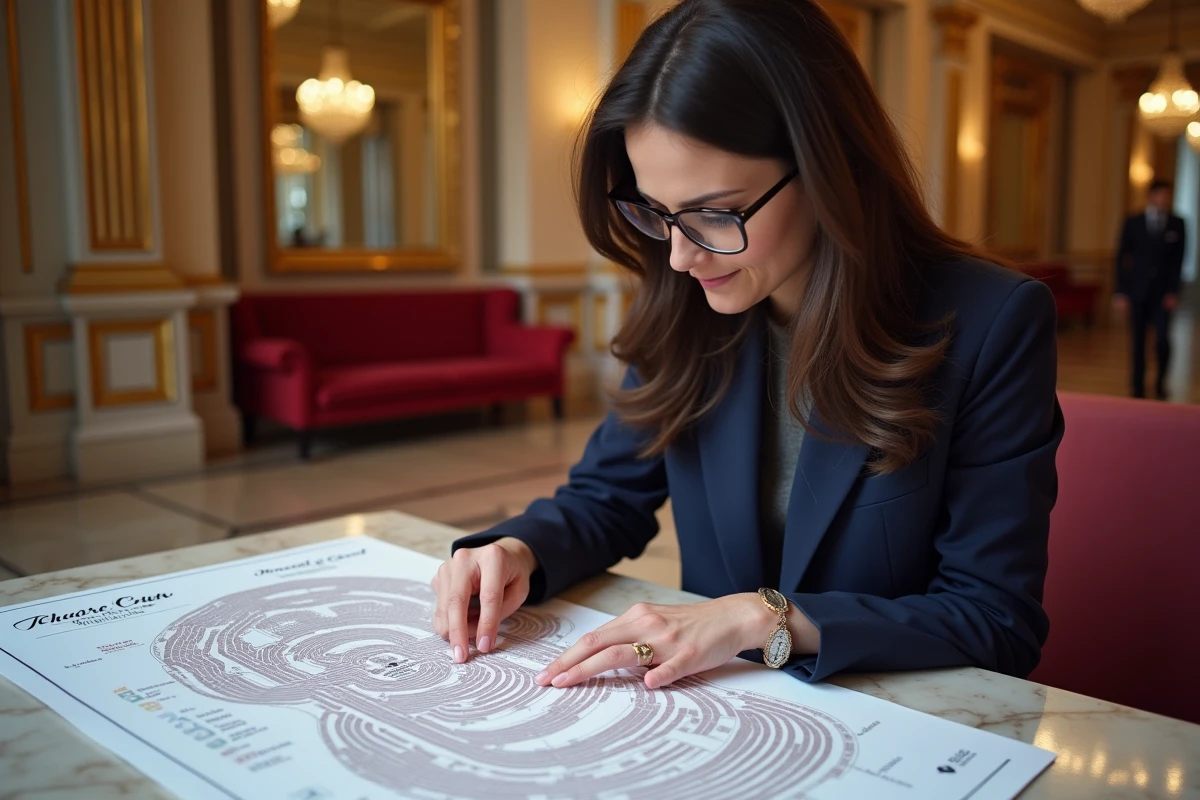
A basket seat does not always guarantee the best acoustics, contrary to popular belief. The highest prices do not systematically correspond to the most sought-after locations by regulars.
Some rows, equidistant from the stage and the exits, offer optimal visibility rarely mentioned in official brochures. The plans provided by the Théâtre du Palais-Royal include indications that often escape attention during booking.
The plan of the Théâtre du Palais-Royal: understanding the venue to make better choices
The Théâtre du Palais-Royal, in Paris, is a benchmark among Italian-style theaters. Its refined architecture and reputation for excellence in acoustics attract generations of live performance enthusiasts. Mastering the structure of the venue maximizes every moment of the performance.
To navigate, here’s how the spaces are divided:
- The orchestra, directly facing the stage
- The basket, which occupies the first balcony
- The upper balcony
- The gallery, at the top of the venue
- The boxes and stalls, at ground level
This division is not just a matter of aesthetics: it also reflects the social history of the theater, with each area having its own audience, codes, and atmosphere.
The seating plan, available on-site or via online interactive tools, precisely indicates each row and seat. The numbering, alternating letters and even or odd numbers, can be surprising if one is not familiar with Italian-style theaters. Taking time to study this plan is to anticipate the quality of the viewpoint, the distance to the stage, but also to spot seats that might be obstructed by a column or a railing. Those who know the venue well often prefer the center of the orchestra or the basket, where the view perfectly complements the staging.
However, there are less expensive and equally satisfying alternatives: seats on the advanced sides of the balcony or the first rows of the gallery sometimes offer excellent surprises. Using the plan of the Théâtre du Palais-Royal to choose your seats wisely opens up a world of possibilities, from the discreet comfort of the boxes to the vibrant enthusiasm of the gallery. Here, everyone can tailor their choice to their desires and the scheduled performance. Mastering the plan gives a personalized dimension to the evening.
Where to sit to make the most of the show?
At the Théâtre du Palais-Royal, each area of the venue offers a unique atmosphere, balancing proximity to the artists and an overall view of the stage. The orchestra, the true heart of the venue, captivates with the sensation of total immersion: in the center, the view is frontal, ideal for savoring the actors’ performances in all their details. The acoustics reveal the full richness of a play.
The basket, on the first balcony, combines height and balanced distance. Those who enjoy being immersed in the action while maintaining a slight distance particularly appreciate this section. The first rows are highly sought after, especially during major premieres.
On the side of the upper balcony, the experience changes: one gains height and an overall view, but some side seats may have partial visibility due to the period architecture. As for the gallery, perched at the very top, it attracts those who love to vibe with the audience and enjoy lower prices. Even from a distance, the enthusiasm does not wane, but beware of blind spots and oblique views.
To choose wisely, several criteria must be considered: the seat category, the distance to the stage, and the nature of the performance. Ticket agents, well-informed, know how to guide spectators to the area that will best meet their expectations.
Our clever tips for finding the ideal seat according to your desires and budget
The interactive seating plan of the Théâtre du Palais-Royal quickly becomes an ally for juggling visibility and ticket prices. It takes just a few clicks to visualize each space, from the orchestra to the basket, from the balcony to the gallery, and precisely locate the available rows and seats. This detailed mapping allows one to anticipate the distance to the stage, the angle of view, or the presence of reduced visibility areas, as in an Italian-style theater, columns and railings are never far away.
To go further, some platforms offer a view simulation from the selected seat. This little extra allows one to project themselves and avoid unpleasant surprises, especially if perspective or proximity to the artists is very important to you. For those who wish to manage their budget, there are discounted rates for young people, students, or groups. These offers, well indicated during online purchases, sometimes open access to seats where one would not expect to find such conditions.
To optimize your chances, check the real-time availability when booking. The most sought-after seats go quickly, especially for performances by Alexis Michalik or Jean-Philippe Daguerre that create an event. Taking the time to consult reviews from other spectators about the welcome, the comfort of the seats, or the management of the cloakroom can make a difference. Finally, do not overlook the personalized advice of a ticket agent for any questions about seat numbering, categories, or accessibility: nothing replaces the expertise of a professional from the venue.
By stepping through the doors of the Théâtre du Palais-Royal, each spectator crafts their own experience, shaped by their choice of seat and the magic of the performance. The venue, with its distinct areas and varied perspectives, is just waiting to be tamed. Next time, look up: the best seat might be the one you hadn’t considered.