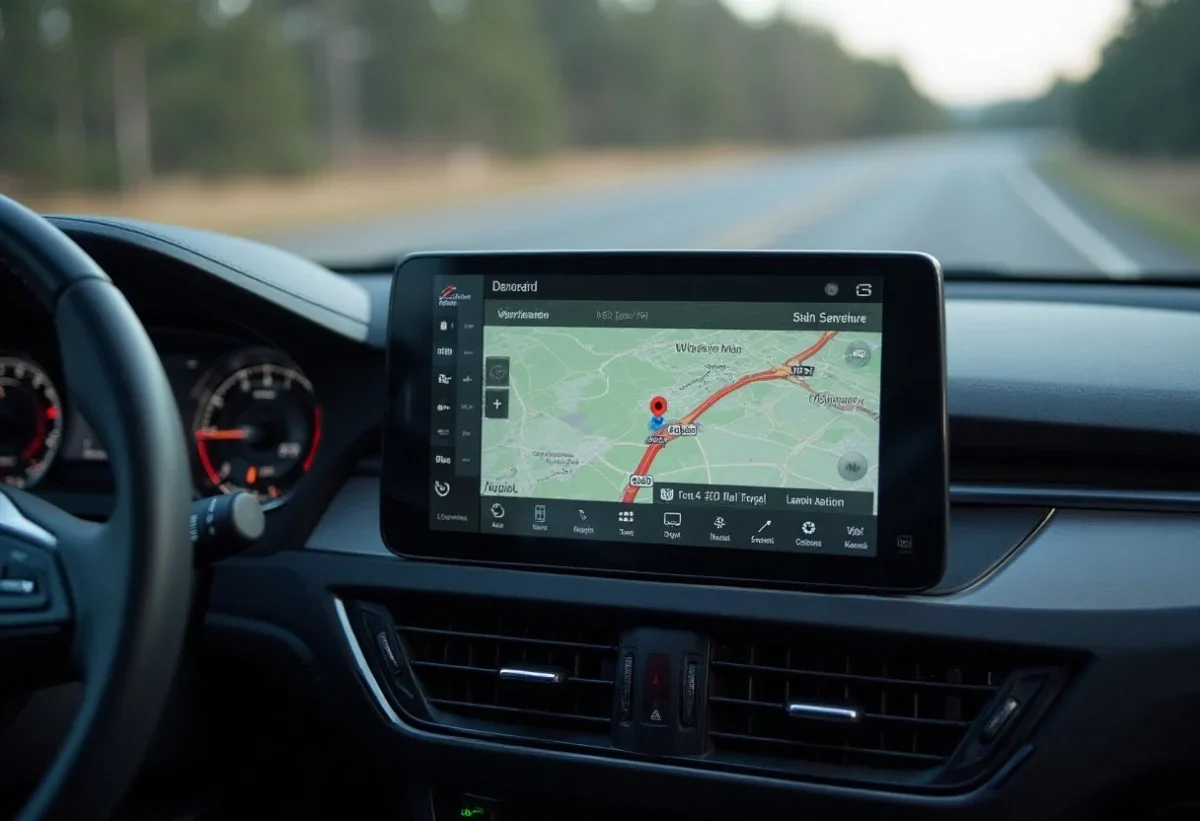
The digital age has transformed our way of perceiving the world, and the transportation sector is no exception to this change. Vehicle geolocation has become an indispensable tool, both for businesses and individuals. With impressive precision, this innovation allows for real-time tracking of vehicles, offering a multitude of strategic and operational advantages. What are the mechanics of this technology and how does it change our relationship with mobility?
The technological foundations of geolocation
Understanding the underlying technologies is essential to fully appreciate the impact of vehicle geolocation. These devices rely on a complex network of satellites and advanced computer systems.
The Global Positioning System, commonly known as GPS, forms the basis of most geolocation applications. With a constellation of satellites orbiting the Earth, GPS allows for the precise determination of a vehicle’s location anywhere on the planet.
In addition, other technologies such as GLONASS and Galileo complement and enrich location data. The integration of these systems ensures unparalleled accuracy, reducing margins of error to just a few meters.
Geolocation devices are equipped with receivers capable of capturing these signals and converting them into usable data for users.
Practical applications of vehicle geolocation
Geolocation is not limited to simply locating vehicles. Its potential extends to a variety of practical applications that transform our daily lives.
- Fleet optimization: For transportation and logistics companies, fleet management is a major challenge. Thanks to real-time location tracking, managers can monitor routes, reduce travel times, and thus improve their efficiency.
- Enhanced security: Geolocation devices make it easy to locate a stolen vehicle. Additionally, they offer real-time monitoring features that deter risky behaviors.
- Fuel savings: By optimizing the routes taken and monitoring driving behaviors, companies can achieve significant savings on fuel.
- Improved customer service: With transparency and immediate access to information, companies can inform their customers about the status of deliveries, thereby increasing customer satisfaction.
Economic and environmental implications
Vehicle geolocation is not just synonymous with technological progress. It has significant economic and environmental implications that deserve to be explored.
Firstly, increased efficiency in transportation means a reduction in operational costs. Companies that adopt this technology can, for example, reduce their maintenance expenses through preventive maintenance based on real driving and usage data. These savings often translate into more competitive prices for consumers.
Secondly, the ecological impact is notable. By reducing time spent on the road and optimizing routes, CO2 emissions decrease. This represents a significant advancement in the fight against climate change, a major global issue.
Future perspectives of geolocation
The future of vehicle geolocation promises fascinating and revolutionary developments. The ongoing advancement of artificial intelligence and the Internet of Things opens the door to even more advanced applications.
- Autonomous vehicles: With geolocation, autonomous vehicles can navigate with precision, adapting their route in real-time based on road conditions.
- Predictive analytics: Geolocation data, combined with sophisticated algorithms, allows for the prediction of future behaviors, thus anticipating user needs.
- Data sharing: Ride-sharing platforms can leverage these technologies to improve the efficiency of urban travel and reduce congestion.